Massive ficus banyan canopy at 138 Beacon Lane

Customized Tree Care Proposal  ·  138 Beacon Lane, Jupiter Inlet Colony, FL 33469

Restoring the Banyan
at 138 Beacon Lane

Prepared exclusively for Vincent Mastria

A prescription pruning program designed specifically for this property's magnificent ficus banyan — one of Jupiter's most significant specimens.

View the ProgramAssessment Findings
Scroll
0 ft

Canopy Spread

0 ft

Tree Height

0 yrs

Our Experience

0%+

Long-Term Cost Reduction

Tree Assessment

The Tree Is Telling Us
What It Needs

This banyan is a magnificent specimen — and it's communicating clearly about what it needs. Our on-site evaluation identified several structural signals that require a phased, systematic approach rather than a single aggressive trim.

At approximately ~175 ft wide and ~60 ft tall, this ficus banyan is one of the most significant specimens in Jupiter. Its scale demands a systematic, multi-cycle approach — not a single aggressive trim that leaves the tree worse than it found it.

What makes this tree remarkable is also what makes it complex: the extensive aerial root system, the asymmetric canopy shaped by decades of coastal wind, and the structural history left by previous trimmers. Each of these signals tells us something. Our job is to listen.

Front approach with walkway and statues
Front Approach
West-side canopy extending over street
West Canopy Extension
Aerial property appraiser view showing tree footprint
Aerial — Tree Footprint
Tree Profile
SpeciesFicus Banyan
Canopy Spread~175 ft
Height~60 ft
Property138 Beacon Lane
CityJupiter Inlet Colony, FL
Last Serviced5–7 years ago
Referred ByRyan — Prime Turf
01
Wind-Driven Growth Pattern

East-West Asymmetry

Prevailing east winds have restricted growth on the east side while the west canopy has extended 2–2.5x further. This imbalance creates uneven load distribution across the primary scaffold branches.

02
Legacy Structural Compromise

L-Shaped Cut History

Previous trimmers cut an L-shape on the north and west-northwest side to maintain roof clearance. This was likely done when the house was built and hasn't been properly addressed in the 5–7 years since the last service.

03
Self-Correcting Stress Response

Prop Root Development

The west side has developed prop roots — aerial roots that have reached the ground and thickened to provide structural support. This is the tree's own response to the overextended canopy weight on that side.

04
Structural Failure Risk Points

Branch Union Stress

Large limbs show visible stress at branch unions and collars. Overextension has created pinch points and load stress that will worsen with each growing season and storm event.

Full trunk structure, prop roots, and branch architecture
Our Approach

A Three-Cycle
Pruning Program

A tree this size and complexity cannot be corrected in a single visit — not responsibly. Our program works with the tree's natural growth cycles, making strategic corrections over time that produce lasting structural improvement.

Each cycle builds on the previous one. The tree responds, we observe, and we adjust. This is prescription pruning — not guesswork.

01
Immediate

$7,500

Cycle 1

Structural Corrections & Clearance

Address the most critical structural issues, establish proper clearances, and begin the process of rebalancing the canopy. We trim 6–8 feet inside the property line — so in three years, the canopy grows back to the line, not past it.

Structural correction of high-risk branch unions
Clearance pruning for roof, structures, and sight lines
Light canopy thinning to reduce wind load
Strategic stub cuts on major removals — allowing the tree to redirect energy over 6–9 months before final cuts
Trim inside property line for long-term boundary management

We intentionally do not perform full crown reduction in Cycle 1. Removing too much canopy at once shocks the tree and triggers aggressive epicormic growth — the exact problem we're solving.

02
12 months after Cycle 1

Based on tree response

Cycle 2

Crown Reduction & Stub Removal

With the tree having had a full growing season to respond to Cycle 1 corrections, we proceed with the primary crown reduction and remove the strategic stubs placed during the first visit.

Crown reduction of 25–35% overall canopy volume
Remove stubs from Cycle 1 — the tree will have redirected growth by now
Continue structural corrections as the tree reveals new priorities
Further rebalancing of east-west canopy weight distribution

Pricing is determined after evaluating the tree's response to Cycle 1. Every tree responds differently, and we adjust our approach based on what we observe — not a predetermined script.

03
12–24 months after Cycle 2

Significantly reduced

Cycle 3

Refinement & Maintenance Transition

The final cycle focuses on fine-tuning and transitioning the tree into a sustainable maintenance schedule. After this cycle, the tree enters a routine care program.

Touch-up pruning and fine detail work
Final structural adjustments
Canopy shaping and aesthetic refinement
Transition to maintenance pruning every 3–5 years

After completing all three cycles, ongoing maintenance costs decrease by approximately 50%. The tree will be structurally sound, properly balanced, and require far less intervention going forward.

The Long-Term Value

After completing all three cycles, ongoing maintenance costs decrease by approximately 50%. The tree will be structurally sound, properly balanced, and require far less intervention going forward. We're not creating dependency — we're building independence.

Looking up into canopy — branch structure and stress points
The Science Behind the Approach

Why a Multi-Year
Program?

You've likely received proposals offering to "trim the tree" in a single visit. Here's why that approach fails — and what happens when you invest in doing it right.

01
Trimming Strategy

Inside the Line, Not to the Line

Most trimmers cut right to the property line. The tree grows back past it within a year, and you're calling someone again. We trim 6–8 feet inside the line. In three years, the canopy grows back to the line — not past it. Less frequent service, lower lifetime cost.

02
Tree Biology

Eliminating Epicormic Growth

When a tree is aggressively pruned all at once, it panics. It sends out dozens of weak, fast-growing shoots called epicormic growth — creating more problems than you started with. Our stub-cutting technique and phased approach eliminates this response permanently.

03
Growth Cycles

Working With the Tree's Biology

Trees redirect energy over months, not days. By leaving strategic stubs in Cycle 1 and removing them in Cycle 2, we give the tree time to naturally redirect growth where we want it. The result is a structurally sound tree that maintains its form for years.

04
Risk Management

Documented Care & Duty of Care

If a tree fails and causes damage, the question isn't just whether it was maintained — it's whether it was maintained properly. Our approach follows ANSI A300 standards and creates a documented care history for your property. That matters for insurance, liability, and peace of mind.

"I write prescriptions for trees — not just trim them."

Peter James  ·  PPQ Certified  ·  Nearly 30 years of experience

Trunk base showing prop roots and L-shaped cut
Credentials & Authority

Not Just a
Tree Trimmer

Peter James holds some of the most rigorous certifications in the arboriculture industry. Every decision on your property is backed by decades of field experience and formal training in tree biology, risk assessment, and structural pruning.

Standards

ANSI A300 Standards for Tree Care Operations

Coverage

Licensed and insured up to $2 million with full workers' compensation coverage

Service Area

Broward & Palm Beach County, Florida
ISA Certified Arborist
FNGLA Certified Professional Contractor
LIAF Certified Landscape Inspector
ISA Prescription Pruning Qualification
CMT - Certified Mangrove Trimmer (Florida DEP)
ISA Certified ArboristKey
TRAQ — Tree Risk Assessment Qualified
PPQ — Prescription Pruning QualifiedKey
FNGLA Certified Landscape Contractor
FNGLA Certified Horticulture Professional
CMT — Certified Mangrove Trimmer (Florida DEP)
LIAF Certified Landscape Inspector
Your Investment

Cycle 1 — Getting Started

The first cycle addresses the most critical structural issues and establishes the foundation for the complete program. This is where we begin the conversation between arborist and tree.

Cycle 1 · Structural Corrections & Clearance
$7,500

Structural corrections, clearance & light pruning

Structural correction of high-risk branch unions
Clearance pruning for roof, structures, and sight lines
Light canopy thinning to reduce wind load
Strategic stub cuts on major removals — allowing the tree to redirect energy over 6–9 months before final cuts
Trim inside property line for long-term boundary management
Cycle 2 · 12 months after Cycle 1

Crown Reduction & Stub Removal

Based on tree response

Cycle 3 · 12–24 months after Cycle 2

Refinement & Maintenance Transition

Significantly reduced

Flexible Payment Options Available

Monthly payment arrangements are available. The goal is getting started — the tree's needs don't wait.

Proposal valid for 30 days · Prepared April 2026

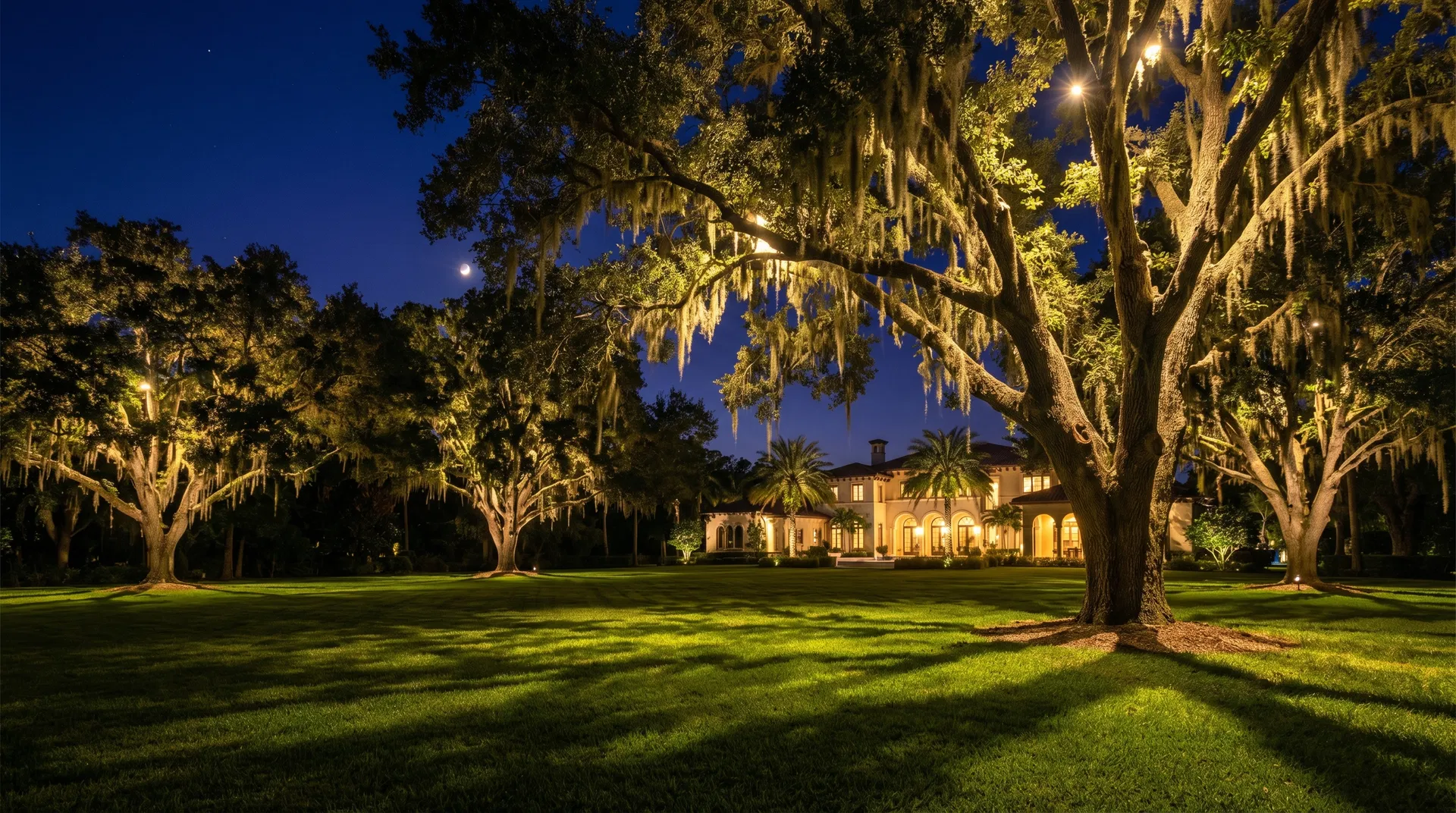
Professional landscape lighting at night
Enhancement Opportunity

Don't Let the Scene
Disappear at Sunset

You invest in beautiful landscaping and a magnificent tree. Professional moonlighting and down-lighting transforms your property after dark — creating dramatic shadows, warm pools of light through the canopy, and an atmosphere that makes the outdoors feel like an extension of your home.

Ask us about landscape lighting design during your consultation.

Next Steps

Let's Protect Your
Tree Investment

Your banyan has been waiting for the right care. Let's schedule Cycle 1 and begin the program that will restore this tree to its full potential — and keep it there.

01

Authorize Cycle 1

02

Peter conducts all work personally

03

Cycle 1 completed per scope

04

Schedule Cycle 2 in 12 months

Digital acceptance & e-signature

Contact us directly to confirm acceptance of this proposal

No Worries Property Maintenance LLC

Broward & Palm Beach County, Florida

ISA Certified Arborist · TRAQ · PPQ · FNGLA Certified Landscape Contractor · ANSI A300